Isabella Mueller (crime writer)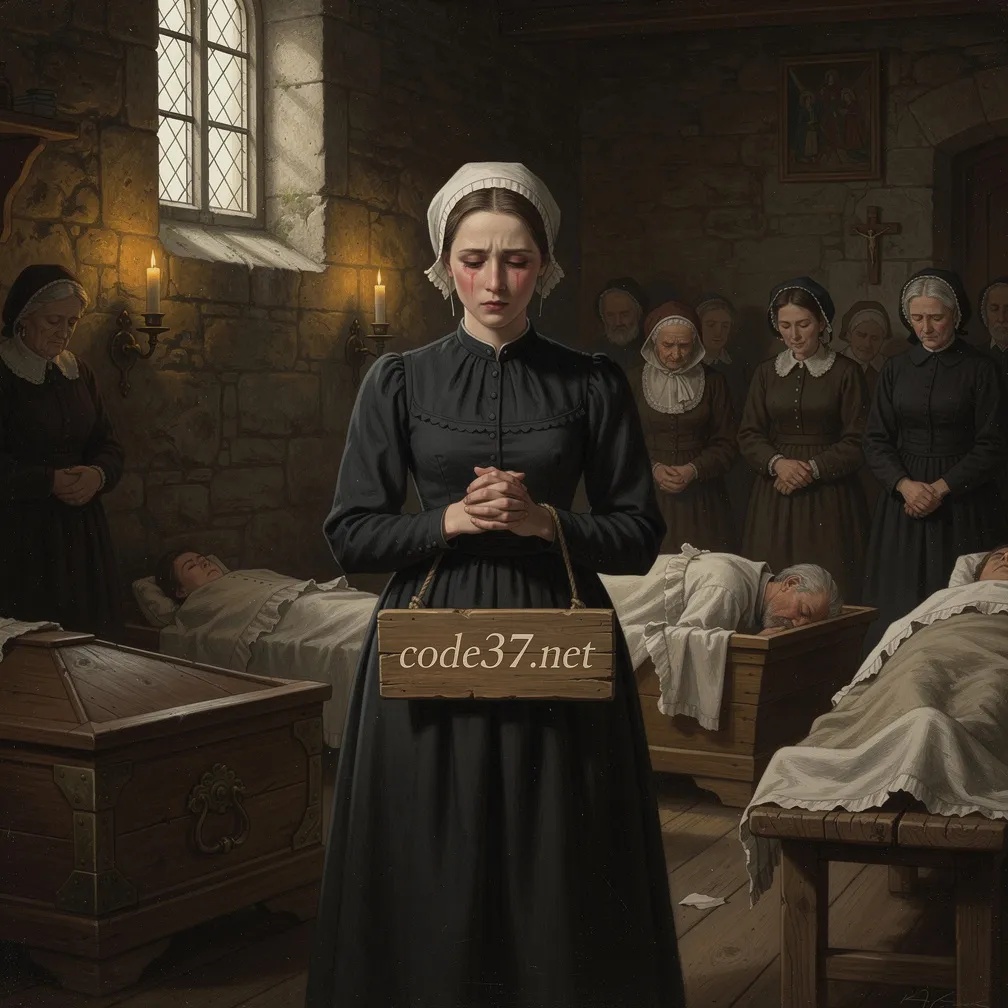
A true master of arsenic poisoning, who managed to poison no fewer than 36 people over a period of 18 years without ever being detected, was the French serial killer and compulsive kleptomaniac Hélène Jégado. But who was this woman who took so many lives, and why? Hélène was born in 1803 in the French village of Plouhinec, where she grew up sheltered on a farm until her beloved mother died when Hélène was seven years old. From then on, Hélène’s upbringing was taken over by her aunt, who sent her to work as a servant in the vicarage at Bubry. When Héléne was 17, she left Plouhinec with her aunt to live with her in the town of Séglien. There, Héléne took a job as a cook for the parish priest until she was dismissed for adding hemp from the granary to his soup. In 1833, Héléne was first suspected of being responsible for several deaths. She had in the meantime been working as a domestic servant for the priest, Father Dr François Le Drogo, in the village of Guern. Between 28 June and 3 October, the priest and six members of the household died, including his father and mother as well as Héléne’s visiting sister, Anne Jégado. However, Hélène played the role of the mourner so perfectly that the initial suspicion against her was quickly dropped. As the deaths had occurred shortly after the cholera epidemic of 1832, a natural cause of death was assumed. Hélène returned to Bubry with her aunt to take her sister’s place. There, her aunt and two other people fell ill within three months, all of whom died whilst being cared for by Hélène at their bedsides. Could this have been a coincidence? Following her aunt’s death, Héléne left Bubry and moved to Locminé, where she worked as a seamstress and lived in a room with Marie-Jeanne Leboucher, who, along with her daughter and son, fell ill shortly afterwards. Only the son survived, as he had declined Héléne’s care. Héléne was then taken in by the widow Lorey, who passed away after eating a soup prepared by Héléne. In May 1835, Héléne took up a position as a housekeeper with Madame Toussaint. During her employment there, there were four further deaths. By this point, Hélène, who had repeatedly been caught stealing at her places of work, had sent 17 people to their graves. Hélène subsequently worked briefly as a servant at the convent in Auray, but had to leave again due to vandalism and her kleptomania. Since then, Hélène worked as a cook in various households in Auray, Pontivy, Lorient and Port-Louis. During this time, people repeatedly fell ill and died. In May 1841, Héléne even killed the little girl Marie Bréger at the Château de Soye. In 1849, Héléne moved to Rennes, where she worked in the household of Théophile Bidard, a professor of law at the University of Rennes. Shortly after Héléne arrived, his maid Rose Tessier fell ill. She died whilst Héléne was nursing her. When, shortly afterwards, Bidard’s other maid, Rosalie Sarrazin, also fell ill and died whilst Héléne was nursing her, this struck two doctors—who had fought desperately to save Rosalie’s life—as strange. As the symptoms resembled those of Tessier, they persuaded her relatives to allow an autopsy to be carried out. When Héléne then, without being asked, protested her innocence, she was arrested as a prime suspect on 1 July 1851. During the investigation, Héléne was linked to 23 deaths by arsenic poisoning between 1823 and 1841. As these fell outside the 10-year statute of limitations for prosecution and there was no scientific evidence, they were not pursued further. According to estimates, Héléne had killed 36 people with arsenic. On 6 December 1851, the trial began against Héléne Jégado, who had in the meantime developed terminal cancer, for three proven murders, three attempted murders and 11 thefts. Throughout the trial, Héléne behaved like a fury, denying any murder by arsenic. The chemistry professor Faustino Malaguti was called to the trial as an expert witness. Héléne Jégado was sentenced to death by guillotine and executed on 26 February 1852 at the Champ-de-Mars in Rennes. This brought to an end the gruesome era of a heinous serial killer.