Isabella Mueller (crime writer)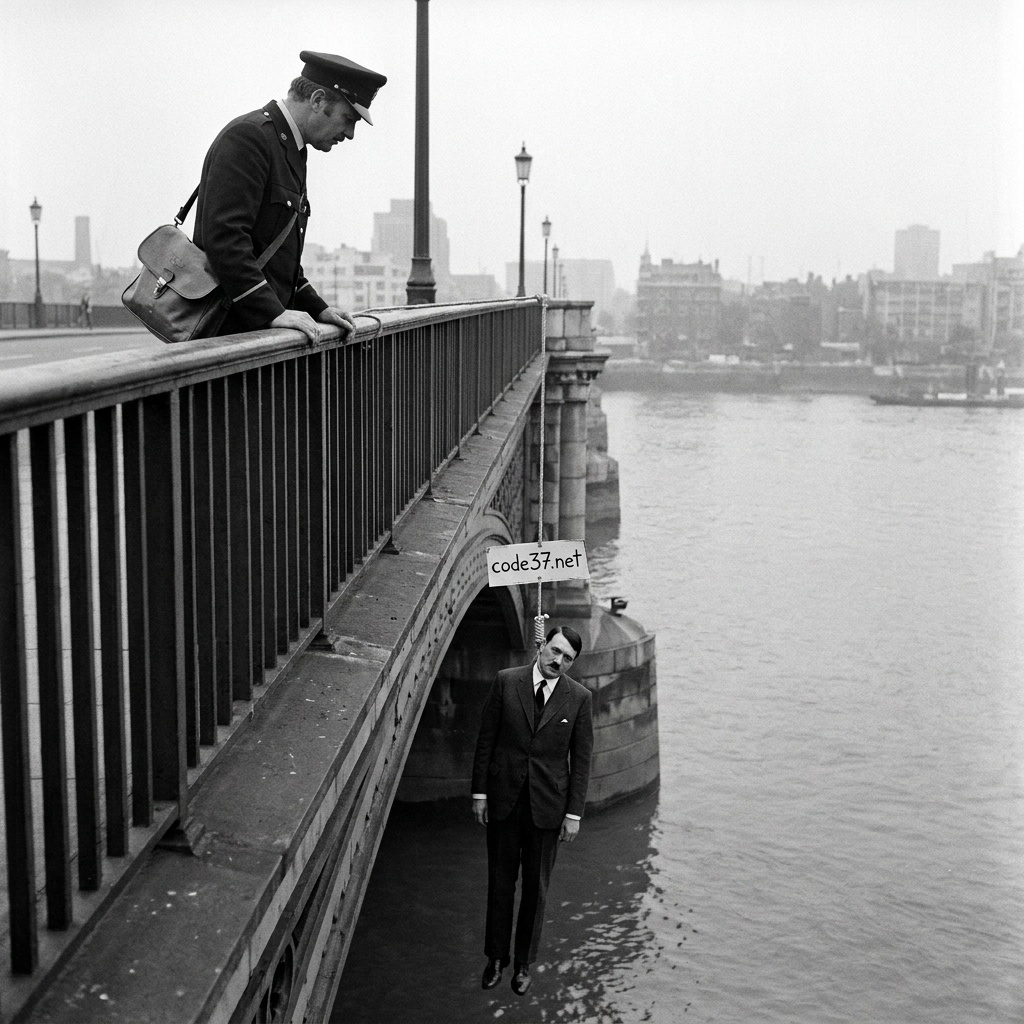
In June 1982, one of Italy’s most influential bankers was murdered; the killing was staged to look like a suicide in order to cover up the dubious financial dealings between the Vatican and the Mafia. It was 17 June 1982 when postman Anthony Huntley saw a plump, short man with a distinctive moustache, dressed in an elegant suit, dangling over the Thames from Blackfriars Bridge in London. The man turned out to be the Italian Roberto Calvi. He was the director of the Milan-based bank Banco Ambrosiano, which was regarded as one of the most powerful private banks in the world. The subsequent post-mortem carried out by British pathologists concluded that he had committed suicide. Roberto Calvi had died of asphyxiation by hanging. This finding was also confirmed by the Milanese pathologists. Only the family doubted the suicide theory; they even hired the detective agency Kroll Associates to investigate the circumstances of his death. This was because not only had a forged passport in the name of Gian Roberto Calvini been found in Roberto’s pockets, but also cash in various currencies worth several thousand dollars, as well as bricks. Roberto had already left Italy on 11 June 1982 with a forged passport and a briefcase containing documents, of which every trace had vanished. He used a motorboat that took him first to Yugoslavia and from there to Austria, where he flew to London by private jet. Always by his side was his bodyguard, Silvano Vittor, with whom he checked into the run-down Chelsea Cloisters apartment hotel, rather than, as was his custom, renting a room in a luxury hotel. His sudden departure from Italy looked like an escape. In a particularly macabre twist, shortly after Roberto Calvi’s death, Banco Ambrosiano – which Calvi had headed since 1971 – filed for bankruptcy. To this day, the bank’s collapse remains the largest in Italian history. Its debts amounted to over 1.3 billion dollars. One day before Calvi’s death, the board of directors had commenced the compulsory liquidation proceedings. It transpired that a large portion of the money had been paid out as loans to so-called shell companies in the Bahamas and Panama, with the recipients unknown. Roberto Calvi had already been arrested in 1981 for foreign exchange offences and sentenced to two years’ imprisonment, which had been suspended on probation. The bank’s collapse finally brought Calvi’s illegal dealings to light. Calvi, who was dubbed ‘God’s banker’ and whose bank was referred to as the ‘Bank of the Priests’ due to his dealings with the Vatican, was a close friend of the head of the Vatican Bank (IOR), Archbishop Casimir Marcinkus. Together with him, he carried out risky business deals in Italy and Latin America. However, Calvi also maintained close ties with the Mafia. In addition to foreign exchange transactions for the Vatican, he laundered money for the Mafia. Under Calvi’s leadership, Banco Ambrosiano became a money-laundering operation par excellence, owning shell companies in the Bahamas, Panama, Vaduz, Zurich and Luxembourg. Calvi juggled millions on a daily basis, shuffling them back and forth. The Vatican Bank (IOR) played a key role in this, as it could simply transfer the money abroad without any restrictions. It is an open secret that the Polish Pope John Paul II had channelled over 80 million dollars to his compatriots via various shell companies. This enabled support to be given to the Solidarity movement in Poland, which brought about the fall of the Iron Curtain. Roberto Calvi knew all about it; had this become public knowledge, the damage to the Catholic Church would have been immense. Calvi had gradually lost track of the situation, having squandered large sums of Mafia money on speculative investments. Before fleeing Milan, he had gathered evidence of all these shady dealings, which he carried with him in his briefcase as a form of life insurance. Through illegal capital exports, Calvi had moved enormous sums of money; on his payroll were politicians whom he bribed. Media conglomerates are also said to have paid bribes to Italian politicians via Calvi’s bank. The scandal stretched from the Vatican through the Mafia to the world of high finance. Calvi was also a member of the secret Masonic lodge ‘Loge Propaganda 2’, which helped to cover up his dubious dealings. Calvi’s only friend, who had tried to save the bank from bankruptcy in 1981, was the Sardinian businessman Flavio Carboni. It is said that Carboni also persuaded Calvi to flee, having secretly organised everything. Before Calvi left Italy, he had told his daughter that if he were to spill the beans on everything, not a single stone would be left standing in the Vatican. Indeed, on 1 December 1988, the Milan Civil Court accepted the murder theory, resulting in Calvi’s life insurance payout being made to his family. The case was re-investigated by the British and Italian police. In 1998, Calvi’s body was exhumed and re-examined by forensic pathologists using the latest technology. The result was surprising. Calvi had clearly been strangled, presumably at a rubbish tip. Only then had he been hanged on the bridge. This was confirmed by the bruising on his brain and the marks on his neck. If Calvi had in fact committed suicide, nylon fibres from the rope would have been found on his hands when he placed the noose around his neck. Yet, in fact, there were none. In the autumn of 2005, a murder trial took place in Rome. Five people were charged with the murder of Roberto Calvi. They were the Mafia accountant Giuseppe ‘Pippo’ Calo, the so-called ‘Mafia treasurer’, who was alleged to have ordered the murder; the two businessmen Ernesto Diotallevi and Flavio Carboni; Carboni’s ex-girlfriend Manuela Kleinszig; and Calvi’s bodyguard Silvaro Vittor. The prosecution sought life imprisonment for all those involved. However, due to a lack of evidence, the trial ended in an acquittal. Flavio Carboni is said to have taken possession of the briefcase at the time, and is alleged to have sold its explosive contents to the Vatican. To this day, the murder of Roberto Calvi – whose knowledge cost him his life – remains unpunished.