Isabella Mueller (crime writer)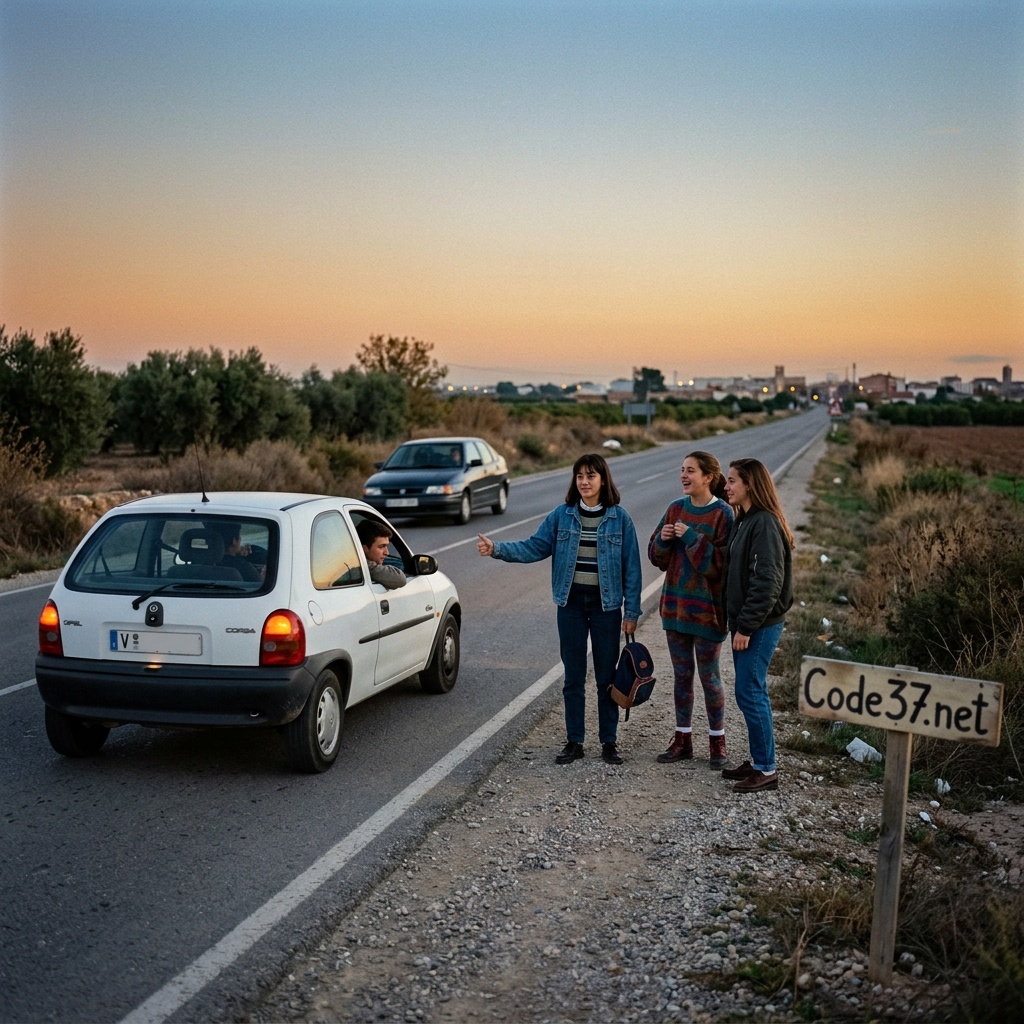
One of the most notorious murder cases in Spanish criminal history involves the so-called Alcásser girls. These were three girls—Miriam García Iborra, Antonia Gómez Rodríguez, and Desirée Hernández Folch—from the Spanish village of Alcásser. These 14- to 15-year-old girls were abducted, brutally raped, tortured in the most gruesome manner, and killed. The crime shocked all of Spain and caused a worldwide sensation due to its extreme brutality. Media interest was so intense that the trial was broadcast during prime time on Spanish television. To generate high ratings, even photos of the girls’ mutilated bodies were shown. This marked a turning point for the Spanish media, which had thereby violated every ethical principle. But what had happened? On November 13, 1992, the three girls wanted to go to the Cooler nightclub outside Picassent, where a school party was taking place. Before setting off, they visited their sick school friend. Afterward, they planned to hitchhike to the nightclub, something they had often done when their parents didn’t have time to drive them there. After all, what could possibly happen to the three of them? First, a young couple from their village of Alcásser gave the girls a ride to a gas station not far from Picassent. Then they got into a white Opel Corsa driven by two young men. That was the last time the girls were seen alive. Since the girls never arrived at the nightclub, the Guardia Civil launched a major search operation. It was not until 75 days after the three girls’ disappearance that their bodies were found on January 27, 1993, in a ditch near La Romana. Heavy rain in the preceding days had softened the ground, exposing the three bodies, which were wrapped in carpet. The autopsy revealed that the three girls had been sexually abused, tortured, and ultimately shot. At the crime scene, the Guardia Civil found a social security card belonging to Antonio Anglés Martin. They drove to his house, but found only his friend Miguel Ricart there, as Anglés had already fled. Ricart was nearly apprehended in Villamarchante. However, he managed to escape to Minglanilla, from where he traveled to Lisbon, where he boarded a container ship bound for Plymouth. He disembarked off the coast of Ireland. To this day, he is considered one of Interpol’s most wanted criminals. It is unclear whether he is even still alive. Miguel Ricart confessed to the Guardia Civil that on November 13, 1993, he was traveling by car with his friend Antonio Anglés when they picked up the three girls as hitchhikers at the gas station. But instead of dropping them off at the nightclub as agreed, they simply drove on. When the girls began screaming loudly, Anglés lost his temper and struck them with the grip of a Star Model BM pistol, knocking out several of their teeth. They then drove to a secluded mountain cabin not far from the Tous Dam, where they tied up two of the three girls and raped them both vaginally and anally. Afterward, they drove to Catadau to get something to eat. Two hours later, they returned to the mountain cabin to rape the third girl. They then tortured the girls all night long. The next day, the girls were forced to walk to a pit, where they were subjected to further brutal torture. According to the autopsy, Hernández’s right nipple was cut off with a sharp object, and she sustained two stab wounds to her back. In García’s case, the forensic examination determined that her vaginal wounds had been inflicted postmortem. Were the girls further abused after they were already dead? The girls were critically injured with sticks and stones before being shot by Miguel Ricart and Antonio Anglés and buried in the pit, wrapped in rugs. A wide variety of murder theories circulated, ranging from satanic rituals and the production of a snuff film to the involvement of Spanish politicians. This was because the autopsy revealed seven hairs that did not belong to either of the two murderers or to the three girls. So there was a third person! Who was this person? Why did Miguel Ricart, an ordinary petty criminal, take all the blame, and why was there no trace of his friend Anglés, whom not even Interpol could track down? In September 1997, Miguel Ricart was sentenced to 186 years in prison and is said to have been released by now. The murder of the three girls continues to provide plenty of material for films and books and has also been adapted into a Netflix series.