Isabella Mueller (crime writer)
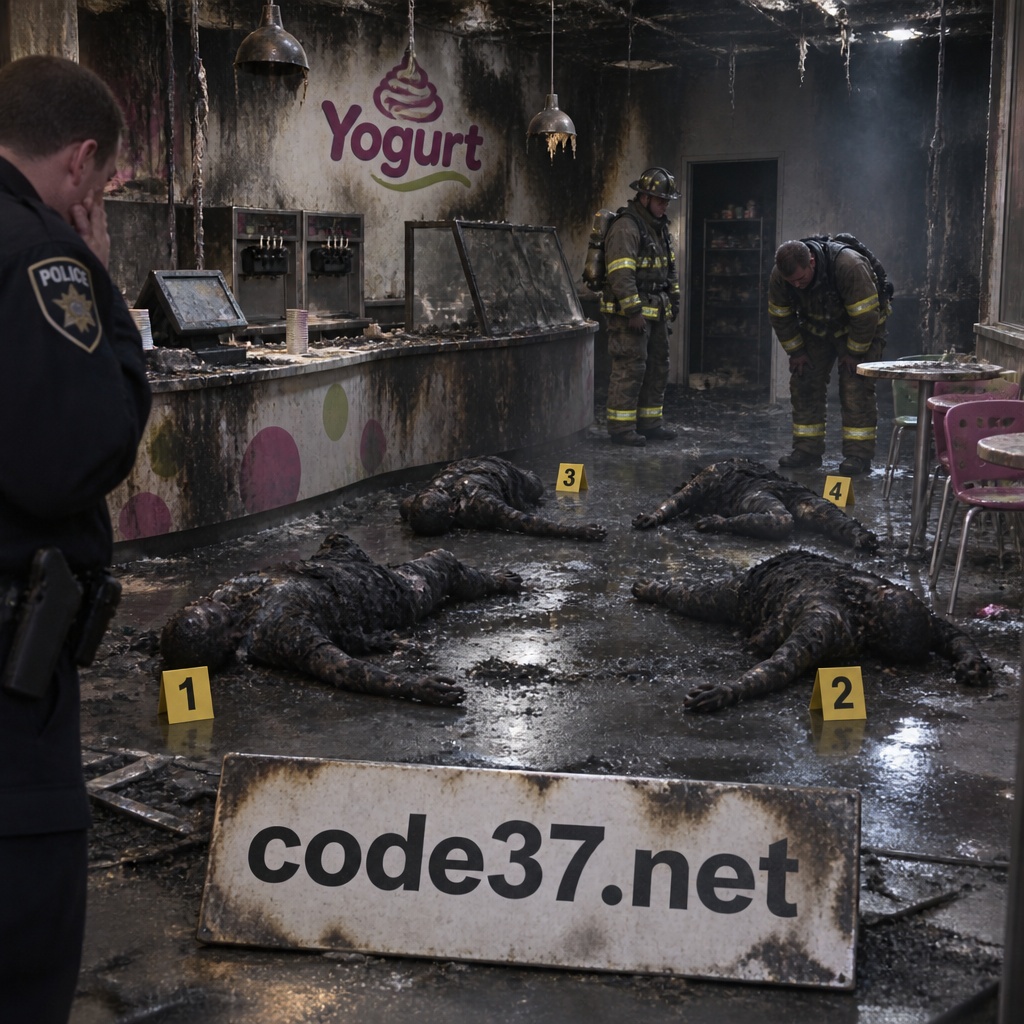
A crime that remained an unsolved mystery for decades was the brutal murder of four teenage girls in Austin, the capital of Texas, in 1991; these are also known as the ‘Yoghurt Shop Murders’ due to the crime scene being in a yoghurt shop. On 6 December 1991, the city of Austin was struck by an unimaginable tragedy that cruelly ended the lives of four young girls. At the yoghurt shop ‘I Can’t Believe It’s Yogurt!’ in a shopping centre on West Anderson Lane, 17-year-old Jennifer Harbison, her shift supervisor Eliza Thomas (also 17), as well as Jennifer’s 15-year-old sister Sarah and her 13-year-old friend Amy Ayers were murdered. Almost four decades later, the case was finally solved, and the brutal crime reached its chilling conclusion. On that fateful Friday evening, Jennifer Harbison and Eliza Thomas were about to finish their shift when Jennifer’s sister Sarah and her friend Amy entered the shop to head home together after work. Opening hours ended at 11 pm; shortly before that, the routine of tidying up and preparing for the next day had begun. A final payment transaction was recorded at 10.42 pm. Shortly before midnight, police officers noticed a fire in the yoghurt shop, which appeared to be closed, and alerted the fire brigade. What the emergency services found after extinguishing the fire sent shivers down the spines of even the most experienced rescuers: four bodies burnt beyond recognition, all naked, bound with their own underwear and gagged with cloth. Each victim had been systematically executed with .22 calibre ammunition. The youngest, Amy Ayers, also had a 9mm gunshot wound and signs of rape, suggesting that she may have still been alive after the others had already died. The fire had been started using napkins and accelerant; a three-figure sum in dollars was missing from the till – a trivial motive given the brutality of the crime. The first promising lead pointed to Maurice Pierce, a teenager who was apprehended a few days after the crime with a .22 calibre pistol. However, despite extensive questioning of his friends Michael Scott, Robert Springsteen and Forrest Welborn, the investigation initially yielded no results. The murder investigation stalled and became a cold case. It was not until the late 1990s that the case gained momentum again following a change in investigators. Under immense pressure, Scott and Springsteen eventually confessed to the crime, which initially resulted in a life sentence for Scott and a death sentence for Springsteen, which was later commuted to life imprisonment. However, these confessions were later retracted and exposed as having been obtained under duress. The Court of Appeal eventually quashed the convictions on the grounds of unconstitutional proceedings. The decisive turning point came in 2009 with a DNA test, which showed that no DNA traces from the four suspects were found on the body of the abused Amy Ayers. Scott and Springsteen were released, and the proceedings against them were dropped. It was not until 2025 that the case was unexpectedly solved: genetic testing and modern forensic methods enabled the serial killer Robert Eugene Brashers to be identified as the perpetrator. Brashers had taken his own life in 1999 during a confrontation with police officers and, in retrospect, could be linked to several murder cases in the USA. The bullet used in his suicide matched one found in a drain at the yoghurt shop. This, together with a DNA match, confirmed that he was responsible for the horrific murders. Brashers, who was born in Newport News in 1958, had a long criminal history. As early as 1986, he was convicted of attempted murder in Florida, but was released on parole in 1989. In the years that followed, he continued his murderous spree, leaving a trail of violence and terror until his life came to a bloody end. Among his more notorious crimes were a double murder in 1998 in Portageville, Missouri; another murder in 1990 in Greenville, South Carolina; and the rape of a 14-year-old girl in Texas in 1997. The final identification of the killer brings to a close one of the most horrific chapters in Austin’s criminal history. Whilst this resolution brings no comfort to the victims’ families regarding the loss of their beloved daughters, it at least gives them the certainty that the perpetrator has been brought to justice, albeit posthumously. “Their names will not be forgotten,” said a spokesperson for the Austin Police Department at a press conference. “We will always remember Jennifer, Eliza, Sarah and Amy, and we will strive to prevent such atrocities in the future.” The Yoghurt Shop Murders are thus no longer merely a dark legend in the city’s annals, but a sobering reminder of how important it is never to give up hope for justice.