Isabella Mueller (crime writer)
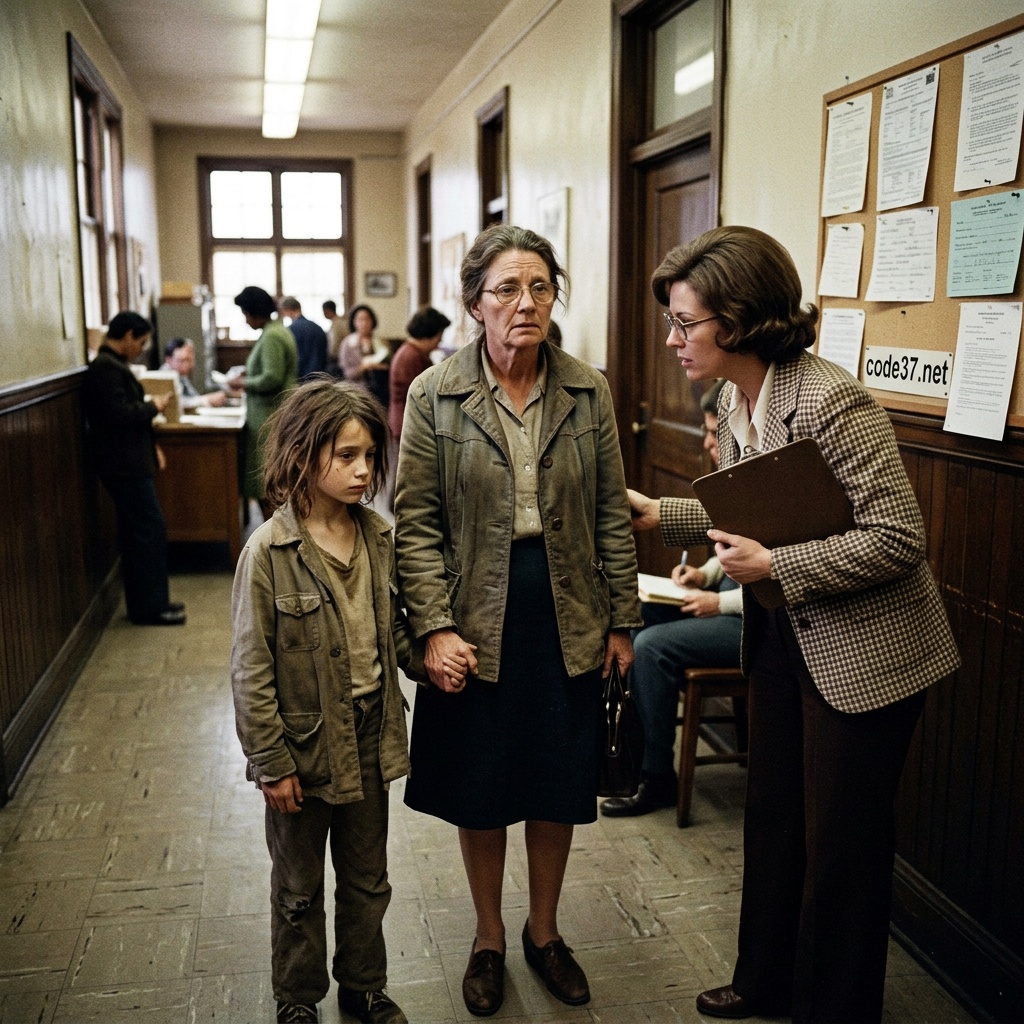
A particularly shocking case of neglect and abuse was that of Genie Wiley, a so-called ‘wolf child’ who grew up completely isolated from the outside world until she was 13. To this day, this case is regarded as one of the most horrific instances of child abuse in modern history. It was only by chance that Genie’s years of torment were discovered. Yet this by no means marked the end of Genie’s ordeal; due to her development, she became a prime subject for research. For Genie presented a mystery that researchers sought to unravel – sometimes pushing the boundaries of ethical conduct. It all began in November 1970 when a woman with her young child accidentally stumbled into the wrong building, thereby setting off an unprecedented chain of events. What followed was the discovery of one of the worst cases of neglect and abuse that investigators had ever seen. On 4 November 1970, a middle-aged woman wandered through the corridors of a building in Temple City with her young child. Fifty-year-old Irene Wiley, who looked ten years older, had fled from her violent husband Clark to apply for a disability pension for the blind. Irene Wiley not only had a cataract in one eye but also suffered from severe neurological damage that had left her almost completely blind. However, due to her poor eyesight, Irene had mistaken one building for another, which is how she eventually ended up at the social services office with her daughter Susan. As she wandered aimlessly, a social worker noticed Irene and her daughter Susan and approached them. When the social worker learnt that Susan was not six years old, as she had initially thought, but was in fact 13, weighed just 26 kilograms and appeared severely neglected, she informed her supervisor. The two social workers quickly realised that the severity of Genie’s condition pointed to more than just physical abuse. This led to the police being contacted; they subsequently arrested Susan’s parents and placed the child in the care of the courts. Susan was taken to UCLA Children’s Hospital, where she was given the name Genie. This was derived from the ‘genie’ in a lamp, as such a spirit only enters human society after childhood. Just like Genie, who had no human childhood, having grown up in isolation and outside human society, and in the process having lost fundamental social and linguistic skills. Susan M. Wiley, later known as Genie, was born on 18 April 1957 in Arcadia, California, as the youngest of four children of Clark and Irene Wiley. Her childhood was marked by neglect. From an early age, her father Clark began to cut her off from the outside world and suppress her bond with her family. Genie, who suffered from hip dysplasia, had to overcome a number of challenges even in early childhood. Her father was convinced that she was mentally retarded and forbade any contact between her and her mother Irene, as well as her brother John. The brutal treatment she endured could not have been worse – she was trapped in a tiny room that served as her ‘home’ but was more like a cage. Clark Gray Wiley was born in Oregon in 1901, the son of Judson and Pearl Wiley. Clark’s mother was a brothel owner who, following the death of his father Judson in a lightning strike, placed Clark in an orphanage. During the Second World War, Clark worked as an aircraft mechanic, where he met Irene Oglesby, whom he married in 1944. The newlyweds settled in California and Clark re-established contact with his mother, whom he held in high regard despite having been sent to the orphanage. Irene had suffered a serious accident in her youth, which resulted in head injuries and an irreversible visual impairment. Clark was a tyrant who constantly beat his wife and made no secret of his aversion to children. Despite Clark’s hatred of children, Irene became pregnant four times. However, two children died mysteriously shortly after birth, leaving only their son John, born in 1952, and their daughter Susan, born in 1957, to survive. Following the death of Clark’s mother, Pearl – who had been run over by a pick-up truck in the presence of her six-year-old grandson John, who had been living with her since the age of four – his violent behaviour intensified, and Genie’s physical and emotional isolation reached unimaginable proportions. Clark quit his job so that he could keep a constant watch over his family and moved with them into his mother’s small two-room house. Whilst Clark lived in the living room with John and Irene, Genie was kept in a dark room, where she was tied up and abused. The neighbourhood knew nothing of her existence, and her only connection to the world was the darkness of the room in which she was imprisoned. During the day, Genie was tied to a toilet stool, whilst at night she was kept in a sort of cage wearing a straitjacket. Genie had no toys, nor any books; she was never sent to school. Food was quickly shoved into Genie’s mouth by John or Irene, and she often vomited because she could not swallow quickly enough. Genie merely eked out an existence. She was kept completely isolated. Clark, who usually sat in the living room with his shotgun when he wasn’t beating his family, had hoped that Genie would die by the time she turned 12. But Genie held on. Clark had once promised Irene that she could seek help once Genie turned 12, but he did not keep his promise. After her rescue, Clark committed suicide by shooting himself with his revolver inside the house. Irene, on the other hand, was acquitted, as she was the victim of Clark’s controlling behaviour and violence. After her rescue, Genie began a new life at the UCLA Children’s Hospital under the care of psychologists and linguists. The opening up of her world presented a unique opportunity, but also an ethical challenge. Researchers were both fascinated and concerned about the impact of her isolation on Genie’s ability to develop. The public reacted with shock to Genie’s story. A photograph of her attracted nationwide attention, showing the frightened girl with wide eyes who could neither speak nor walk properly. The case felt like a window into another world, one that many considered unimaginable. Genie’s progress was remarkable, but also often frustrating. Although she showed some development, her extreme isolation meant she reached the limits of her linguistic abilities. By January 1971, Genie had a vocabulary of 15 to 20 words and could say two phrases: ‘Stop!’ and ‘No more!’. Experts suspected that she had missed crucial stages of language development and that many areas of her brain responsible for language had not been stimulated. The controversy surrounding Genie’s case led to discussions about the ethical boundaries of research involving vulnerable individuals. Genie’s case was regarded by many as a kind of ‘forbidden experiment’, in which the conditions of her isolation corresponded to the theoretical aim of understanding the effects of social isolation on human development. Despite all the hope and efforts, Genie was ultimately not cared for in the way she needed. After the research funding ran out in 1975, Genie returned to her mother at the age of 18. However, her mother was completely overwhelmed by the task of raising Genie, so she placed her in a foster family. This family, however, turned out to be strict and abusive, which led to a regression in her development. After staying with various foster families, Genie was placed in a private state-run care home, where she still lives today. Genie’s mother, Irene, died in 2003. Her brother, John, tried to lead a normal life after Genie’s rescue. He married and had a daughter. But the shadows of the past would not let him go. He died in 2011 at the age of 59, having been unable to overcome his childhood trauma until the end of his life and, unlike Genie, having received no psychological support whatsoever. Genie remains a sad reminder of what can become of a child’s love and understanding when they are excluded from society. Ultimately, the story of Genie Wiley not only reveals the dark sides of human behaviour, but also raises questions about ethics and responsibility in science. It is a powerful reminder that behind every case of abuse there is a human being who has the right to protection and a chance at a normal life.