Isabella Mueller (crime writer)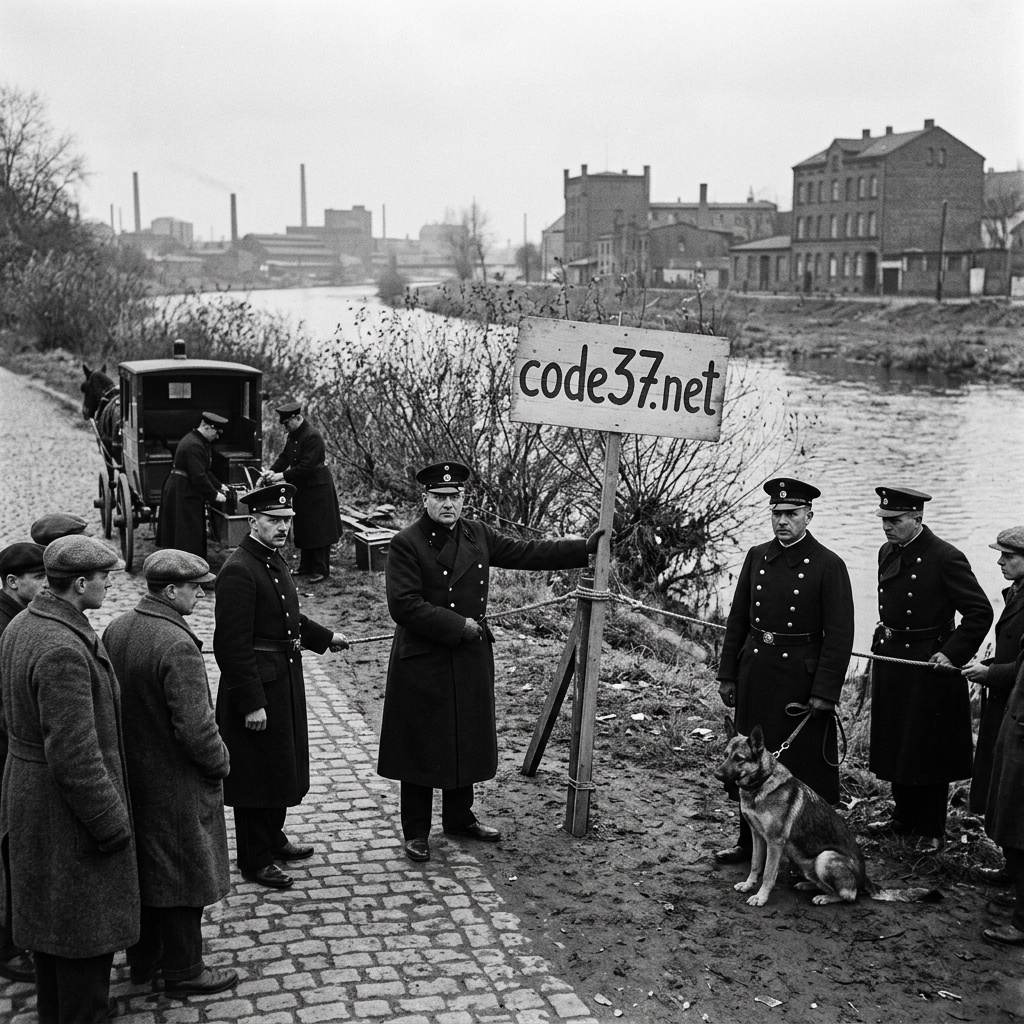
In 1924, Hanover became the scene of one of the most gruesome crimes in German history. Human remains were discovered on the banks of the River Leine, an event that left a lasting mark on the city and shocked the public. Attention turned to Fritz Haarmann, a man with a criminal record who was regarded as the prime suspect in a series of heinous murders that claimed the lives of at least 22 young men. These events are not only part of criminal history, but also shed light on the social and psychological aspects of crime. In the spring of 1924, children playing by the River Leine discovered a human skull. What initially appeared to be an isolated incident soon turned out to be a series of gruesome discoveries. A total of 500 body parts were recovered, belonging to more than 20 male victims. Investigations revealed that all the victims were young men who had been reported missing to the police years earlier. At a time when Hanover was suffering the consequences of the First World War, the railway station served as a hub for the homeless and held a dangerous allure for many young men. Among them was Fritz Haarmann, whose horrific crimes were soon to come to light. Fritz Haarmann was born in Hanover on 25 October 1879. Even in his youth, Haarmann stood out for his criminal behaviour. He was charged several times with “sexual abuse of boys” and was never really able to break free from his dark past. His mental health problems led to his discharge from military service, and his crimes repeatedly landed him in prison. Apart from his sexual offences, he frequently found himself in trouble with the law over petty crime. The 44-year-old Haarmann lived with 17-year-old Hans Grans, a young man he had met in 1919 and regarded as his partner. Together, they traded in meat and second-hand clothes to make a living. However, whilst Haarmann worked successfully as an informant for the police in the red-light district, suspicions and reports of missing persons began to mount up around him. The turning point in the investigation came on 22 June 1924, when Haarmann had a loud argument with a young man named Kurt Fromm at the station, leading to both being arrested by the police. An officer from the vice squad, who was currently examining the skulls found on the Leine, recognised Haarmann at the police station, as he was one of 80 men in the city who had appeared in court on multiple occasions for having sex with men. Haarmann was arrested on the spot. During a search of his flat, the investigators found items of clothing that clearly belonged to young men. The police took these items away so that members of the public could examine the found property in the hope of obtaining further clues. Indeed, a witness recognised a jacket belonging to her missing son at Haarmann’s flat. His partner also came under suspicion, as he was wearing a suit that belonged to one of the missing boys, which he had bought from Haarmann. This could not be a coincidence! Although there was a great deal of circumstantial evidence, it was not initially sufficient to convict Haarmann. The police resorted to questionable investigative methods in an attempt to extract a confession from Haarmann. In his prison cell, they placed a few of the skulls that had been found, their eye sockets covered with red paper. They placed a candle behind the skulls. In addition, a sack containing human bones was left in the cell. Their aim was to frighten Haarmann into believing that the dead were trying to summon him to join them. To increase the pressure on Haarmann, he was unlawfully subjected to physical abuse during the interrogations. It was not until decades later that these methods were recognised as unethical and disproportionate, when the memoirs of the then Detective Inspector Hermann Lange were discovered. On 1 July 1924, Haarmann finally confessed that he had killed over 20 young men, whom he referred to as ‘doll boys’, in a ‘sexual frenzy’. He described how he lured his victims to his flat with the promise of a free meal, where he first had sex with them before biting through their throats. He then dismembered their bodies with a hatchet – an act that earned him the nickname ‘The Butcher of Hanover’ – before disposing of their remains in the River Leine. Haarmann’s trial began on 4 December 1924 and attracted considerable public interest. The public wanted a swift resolution and punishment. Following a brief trial, in which Haarmann was declared fully criminally responsible according to psychiatric reports, the court handed down the death sentence on 19 December 1924. Haarmann was sentenced to death by guillotine. On 15 April 1925, Haarmann was executed, and his head was handed over to Göttingen University Hospital for medical research. In 2014, it was cremated and buried anonymously in a cemetery in Göttingen. Haarmann spent the last days of his life revelling in the public attention and exploiting the macabre circumstances of his crime for his own ends. The repercussions of his trial were enormous and shaped the public perception of serial killers in Germany. Haarmann became a kind of symbol of evil and the decline of social morality. His atrocities in particular gave rise to a whole culture of horror that lives on to this day. Hans Grans was also arrested and charged with murder. The case against him was based on the allegation that he had sold the victims’ clothing. Although he consistently maintained his innocence, he was convicted of aiding and abetting murder and was also sentenced to death. However, events took a turn when Haarmann threw a letter out of the vehicle to Grans’s father whilst being transported from prison to police headquarters. This letter was found and published by the Hannoversche Allgemeine Zeitung. In it, Haarmann completely exonerated his partner, Hans Grans. Consequently, Grans’s trial was reopened in 1926, resulting in a 12-year prison sentence for complicity. The grim story of Fritz Haarmann not only shocked the people of his time but continues to resonate to this day. The case has been adapted for the screen on several occasions, including in Fritz Lang’s famous film M – A City Searches for Its Murderer, which explores the creeping fear within society. In recent years, too, there have been repeated references to Haarmann in popular culture, whether through songs or exhibitions. A particular controversy flared up in 2007 when Haarmann was featured alongside famous local figures in the City of Hanover’s Advent calendar. The reactions were fierce. Many citizens were outraged by the depiction of such a sinister figure in a context typically associated with the Christmas season. The debate highlights just how deeply rooted the trauma of Haarmann’s crimes is in Hanoverian society. The story of Fritz Haarmann is not only that of a serial killer, but also a reflection of the social fears and challenges of the post-war period in Germany. His crimes, the police’s brutal methods and the public’s reactions raise questions that remain relevant to this day: what drives a person to commit such cruel acts? How does a society come to terms with its darkest chapters? And what responsibility does the state bear towards the victims and the process of coming to terms with their stories? Haarmann is remembered not only as the ‘Butcher of Hanover’, but also as a reminder of the dark sides of human nature and the ongoing challenges in dealing with crime and understanding the victims’ plight.