Isabella Mueller (crime writer)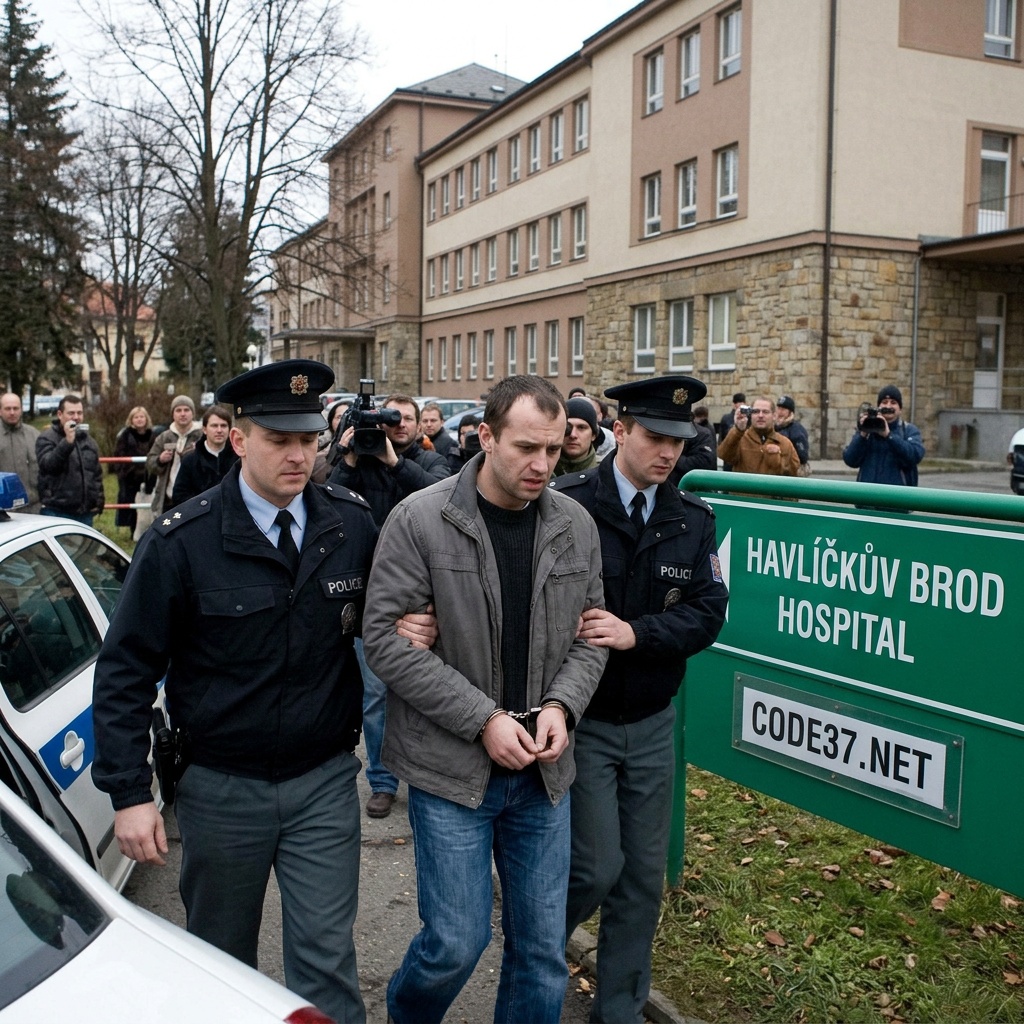
Petr Zelenka, a name that will forever be associated with terror in the Czech Republic. For this man is the worst serial killer in the history of the Czech Republic since the end of communism. Born on 27 February 1976, Zelenka was once a qualified nurse at Havlíčkův Brod Hospital, situated some 100 kilometres south-east of Prague. However, it was not just his profession that made him headline news, but the horrific crimes he committed between May and December 2006. During this period, the then 31-year-old Zelenka murdered seven patients and attempted to kill ten others. Zelenka earned the grim nickname ‘The Heparin Killer’ after it emerged that he had been using a hidden ampoule of heparin, a blood-thinning medication. If administered in the wrong dosage, heparin can cause devastating internal bleeding, and that is precisely what Zelenka did to his victims. He secretly injected the drug and exploited his position as a nurse to get away with it unnoticed. The case is particularly distressing when one considers that most of his victims were elderly people who were already struggling with health problems. Zelenka was arrested in December 2006 after a series of suspicious deaths at the hospital came to light. Many questions remained unanswered: how could so much have gone unnoticed? Why was Zelenka’s behaviour not investigated sooner? The answers to these questions often reflect the failure of the organisations and systems responsible for protecting patients. In February 2008, Zelenka stood trial and was found guilty of committing seven murders and ten further attempted murders. He was sentenced to life imprisonment. On the day of his sentencing, he showed no emotion whatsoever whilst Judge Jiří Vacek delivered the verdict. Zelenka’s lawyer claimed that his client may have acted on impulse to ‘test’ the qualifications of the doctors at Havlíčkův Brod Hospital. This sounds absurd when one considers the tragedy and the suffering of the families affected. After the verdict, Zelenka made a last-minute plea for clemency, saying: “I never wanted to hurt anyone. I never wanted to kill your loved ones.” Yet although this was a desperate attempt to elicit sympathy, it met only with incomprehension and rejection. Zelenka will now become the 34th prisoner to serve a life sentence in the Czech Republic. He will spend the rest of his life behind bars. Whilst many will not shed a tear for him, the bitter aftertaste of his atrocities lingers in society. Zelenka did not seem to be fully aware of his actions. In various interviews, he claimed he did not know why he had administered the drug and that some of his confessions had been made under duress. His defence team had also sought a more lenient sentence by portraying him as mentally ill, but this was rejected by the court. The question that keeps being raised is: how did someone entrusted with the welfare of patients come to commit such crimes? The Zelenka case not only highlights the dark side of the healthcare system, but also raises fundamental questions about accountability and the ability of institutions to identify and address potential risks. For the victims’ families, the verdict brought a measure of justice, yet the wounds Zelenka has left behind will never fully heal. At a time when trust in healthcare professionals is fundamental, Zelenka’s betrayal has taken a heavy toll on those affected. Many relatives are asking themselves how the man who was supposed to help them did the exact opposite instead. There are reports of memorial services where the bereaved had to come to terms with their emotions. They had lost loved ones and now had to speak out about what had happened in order to give space to their grief. Zelenka’s actions led to a deep mistrust of the entire healthcare system, and not just of him personally. Suddenly, all medicines and treatments were called into question. The memories of the deceased patients are kept alive by their relatives. Newspapers reported on the final moments of their loved ones, on the battles they fought against illness and pain, and on how a carer they trusted took their lives. One of the widows of a victim stated in an interview that she went out onto the street every day and thought of her husband’s cries as he pleaded for help. “I just can’t forget the pain, and every day I feel as though I’m losing him, even though he’s no longer here,” she said. Her words bear witness to a wound that will never heal. With Zelenka’s life sentence, Czech society holds out hope that nothing like this will ever happen again. But the questions will remain: were the checks within the healthcare system robust enough? What measures are being taken to ensure that such a breach of trust is avoided in future? In the years following Zelenka’s atrocities, efforts were made to reform the healthcare system to ensure patient safety. Doctors and nursing staff were urged to keep a closer eye on their colleagues, and stricter guidelines on the administration of medication were introduced. Nevertheless, a certain degree of mistrust persists. Petr Zelenka’s case is a sad chapter in Czech history. A man who took an oath to help others instead took the lives of many people. It is a stark reminder of how important it is to uphold human integrity, both in medicine and in life. Even though Zelenka is behind bars, the repercussions of his actions will be felt for a long time to come in the hearts of the bereaved and within the walls of Havlíčkův Brod Hospital.