Isabella Mueller (crime writer)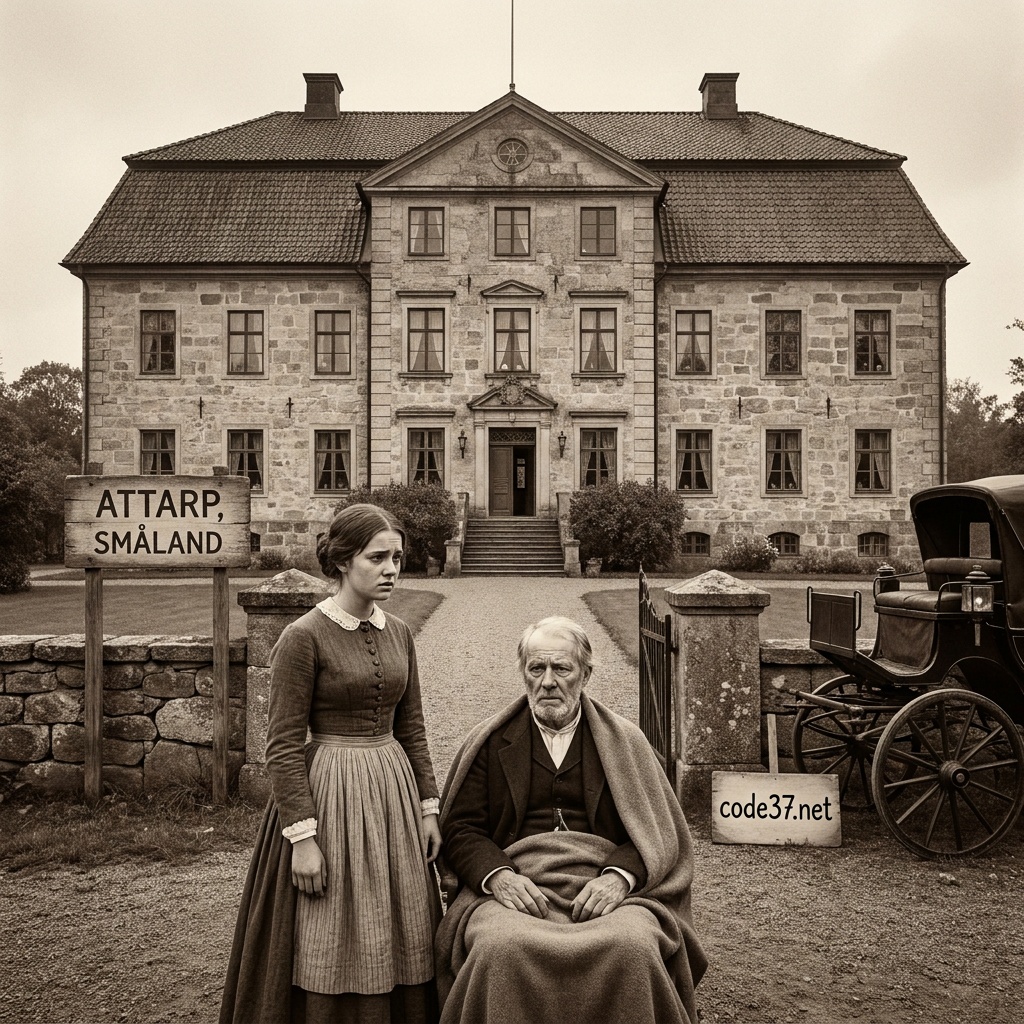
Sofia Maria Ekwall, born in 1826, was a Swedish woman whose name has been etched into the annals of Swedish criminal history. Her crime, considered one of the most notorious murders of the 19th century, is characterised above all by its dramatic twists and the tragic circumstances that led to it. Sofia Maria was the eldest daughter of Per Ludvig Ekwall, a wealthy landowner and descendant of the statesman Christopher Retzius Ekwall. The Ekwall family lived on the Attarp estate in Småland, near Linköping in Östergötland. Sofia grew up in an environment which, although financially secure, was marked by personal tragedies and family tensions. Her father was known for his alcoholism and tyrannical nature, which may have driven Sofia to her dark deeds. On 28 May 1845, Per Ludvig Ekwall suddenly fell ill. At first, it seemed as though he would recover, but just a few days later his condition deteriorated dramatically. The domestic servant, Maja Stina Forsberg, and one of his younger daughters also fell ill. Forsberg died the night after her first seizure, whilst Ekwall continued to fight for his life. Finally, there was a further setback after he had eaten a bowl of porridge which, as it later transpired, had been poisoned. During this time, the younger daughter also regained her strength. Following Forsberg’s death, a doctor determined that the symptoms had been caused by poisoning. It quickly became clear that both Ekwall and Forsberg had fallen victim to a treacherous crime. Suspicion quickly fell on Sofia as the circumstances surrounding the poisoning were investigated in more detail. Initially, the maid Hedda Thorman was suspected of being responsible for the murders of Ekwall and Forsberg. Ekwall’s widow, Hedvig Christina, attempted to expose Thorman as the culprit. She accused Thorman of having given birth to a secret child with Forsberg’s help in the past and subsequently killing it. To prevent Forsberg from revealing her secret, Thorman had poisoned her without further ado. During the investigation, however, it quickly became clear that it was unlikely that Thorman was actually the murderer. In connection with Thorman, 18-year-old Vilhelm Ekwall was arrested; he was the son of the late Per Ekwall, who was said to have fathered a child with Thorman. But it soon transpired that he had nothing to do with the murders, which is why he was released. The police eventually discovered that Sofia Maria herself had ordered arsenic from the chemist’s, allegedly to remove stains from a silk dress. Police investigations revealed that her father had refused to give her permission to marry her fiancé. This established the motive for the police. Sofia had killed her despotic father so that she could finally start a new life with her fiancé. The situation escalated further when it was established that, whilst he was ill, the father had in fact been poisoned by the soup prepared by his own wife. The domestic servant, Forsberg, and Sofia’s younger sister were not meant to be poisoned. But unfortunately, Sofia’s younger sister had eaten from her father’s plate, whilst Forsberg had scraped the soup from the pot. Sofia eventually admitted that she had colluded with her mother to poison her hated father. This marked a turning point in the investigation, as it revealed that the plan must have been carefully thought out and deliberate. Sofia Maria Ekwall was eventually brought to trial for the murder of her father and Maja Stina Forsberg. The trial was a major media spectacle, as society was curious as to how a woman in those days could have committed such cruel acts. After a thorough examination of the evidence, Sofia Maria was found guilty and sentenced to death. However, following a petition for clemency to the King of Sweden, the death sentence was commuted to 28 days on a bread-and-water diet, followed by life imprisonment. In 1876, she was released after 31 years in prison. Her mother, on the other hand, remained at the family home until 1849, without ever being held to account for her alleged complicity. Sofia Maria Ekwall died in 1897. Her case remains one of the most fascinating chapters in Swedish criminal history. The ambiguity surrounding the true responsibility for the murders and the question of whether Sofia acted alone or in collusion with her mother continues to spark debate and speculation to this day. The story of Sofia Maria Ekwall is not merely the story of a murderer; it also raises questions about family dynamics, mental health and the role of gender expectations in the 19th century. It remains a fascinating subject for historians, forensic psychologists and anyone with an interest in Swedish history.