Isabella Mueller (crime writer)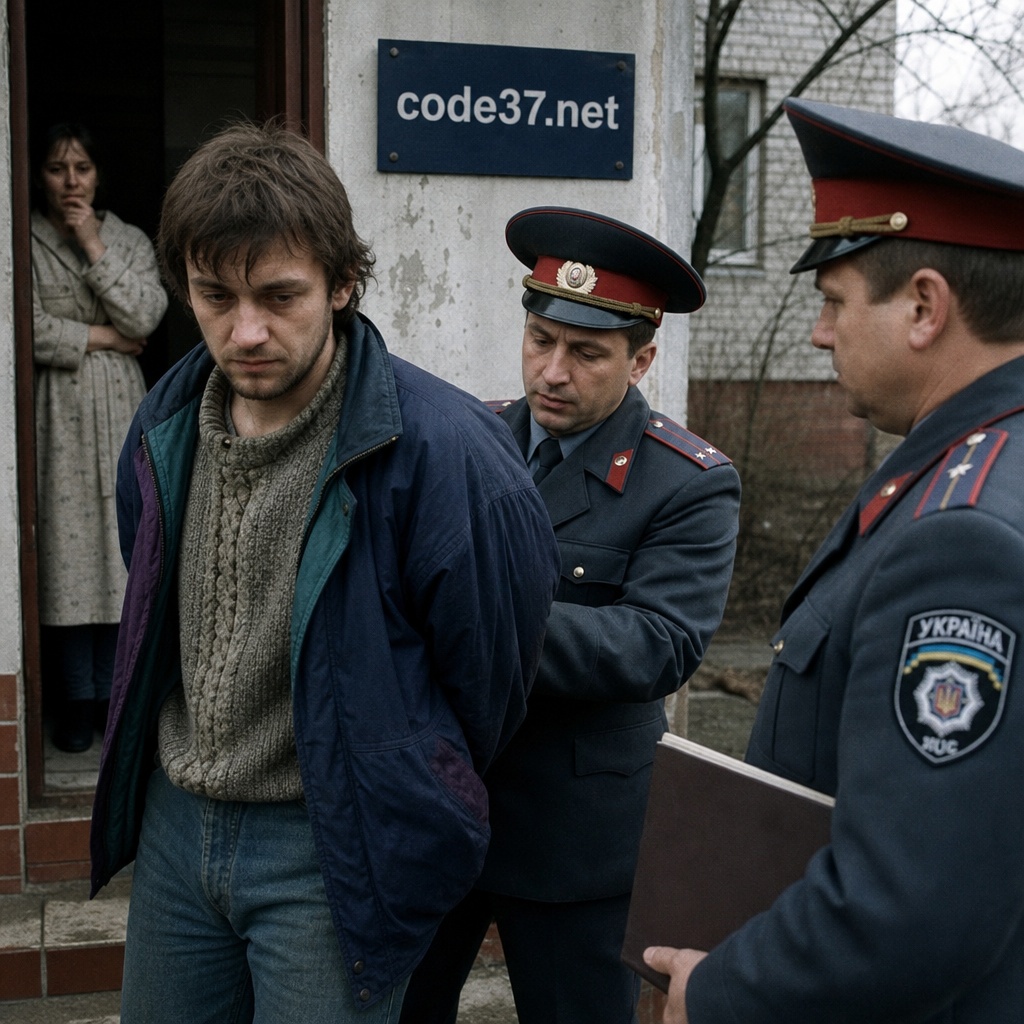
One of Ukraine’s most notorious serial killers was Anatoliy Yuriyevich Onopriyenko, who, between 1982 and 1996, cold-bloodedly murdered no fewer than 52 people, which is why he came to be known amongst the public as the ‘Terminator’, a killer machine. But who was this serial killer, who regretted not having achieved his goal of killing 365 people – one for every day of the year? Anatoliy was born on 25 July 1959 in Lasky. His mother died when he was just four years old. From then on, his brother Valentin, who was 13 years his senior, and his father Yuri looked after Anatolij, as did his grandparents and aunt; however, when he was seven years old, they sent him to the orphanage in Privitnoe. This was the trigger for his later spate of murders. Anatolij was regarded as a loner with a big mouth who studied forestry at university. He joined the merchant navy, where he explored the world as a sailor on the cruise ship Maxim Gorkiy. After leaving the navy, Anatolij took on various jobs. He married and became the father of a daughter; during this time, he met Serge Rogosin, a professional soldier. The two men became friends and, in a drunken fit of humour, decided to rob people asleep in their cars to supplement their household incomes. This was because Anatolij, who had a small family to support, earned very little at the farm where he was working at the time. On 14 June 1989, the two were travelling by car when they spotted a parked Lada in the Sinelnikovo area. Anatoly went over to it with his shotgun. A married couple were asleep in the car; he killed them and robbed them. He hid the bodies in the woods. Just one month later, on 16 July 1989, he killed another couple in their car. This time he burnt the bodies. A month later, on 16 August 1989, he killed a family of five who were sitting in their car. He burnt their bodies once again. After that, Anatolij cut off all contact with Sergej and his family. He travelled around Europe, but was repeatedly deported back to Ukraine for staying in the country illegally. Yet Anatolij did not give up and kept returning with forged documents. Following a shoplifting incident in Vienna, he had to serve a prison sentence there. Upon his release, he fled to Germany, where he committed further robberies, for which he was again sentenced to a prison term. There, it was decided to transfer Anatolij to a psychiatric hospital, from which he, however, escaped. He joined the Mormons until he was deported back to Ukraine in the spring of 1994. Anatolij began murdering again, as a voice in his head commanded him to do so. From then on, he always followed the same modus operandi. At night, he sought out isolated houses. He shot all the family members with a sawn-off shotgun, took their valuables and then set fire to the buildings to leave no traces behind. After eight families had been murdered in their homes in the Lviv area near the Polish border, the largest manhunt in Ukrainian history took place in March 1996, during which 2,000 police officers and 3,000 soldiers combed through an area of 1,000 square kilometres. Tragically, in March 1996, 26-year-old Yury Mozolo was arrested by the Security Service of Ukraine (SBU). They believed Yury to be the mass murderer, which is why six members of the SBU and a public prosecutor tortured him for three days using electric shocks, beatings and burns. Yuri died during the torture. As a result, the seven individuals responsible were brought to trial and sentenced to prison terms. Just 17 days later, on 16 April 1996, Anatolij was arrested. A relative with whom he had been staying had discovered his cache of weapons and subsequently alerted the police. Anatolij was arrested at his fiancée’s house in Zhytomyr. Macabrely, she was wearing an engagement ring that had belonged to one of the murder victims. During the interrogations, he initially confessed to only eight murders; it was only later that he admitted to the murders of 52 people. He showed no remorse whatsoever. The public demanded the death penalty. During his pre-trial detention, site inspections were carried out at the crime scenes, during which Anatolij had to be heavily protected by the police as the residents of the respective towns sought to lynch him. Anatolij was 39 years old when he was brought before the court in Zhytomyr. After a four-month trial, Anatolij was sentenced to death. However, since Ukraine joined the Council of Europe in 1995, the death penalty has no longer been carried out. Anatolij was sent to the high-security prison in Zhytomyr under the highest security classification, where he died of a heart attack on 27 August 2013. This marked the end of the Terminator’s story.