Isabella Mueller (crime writer)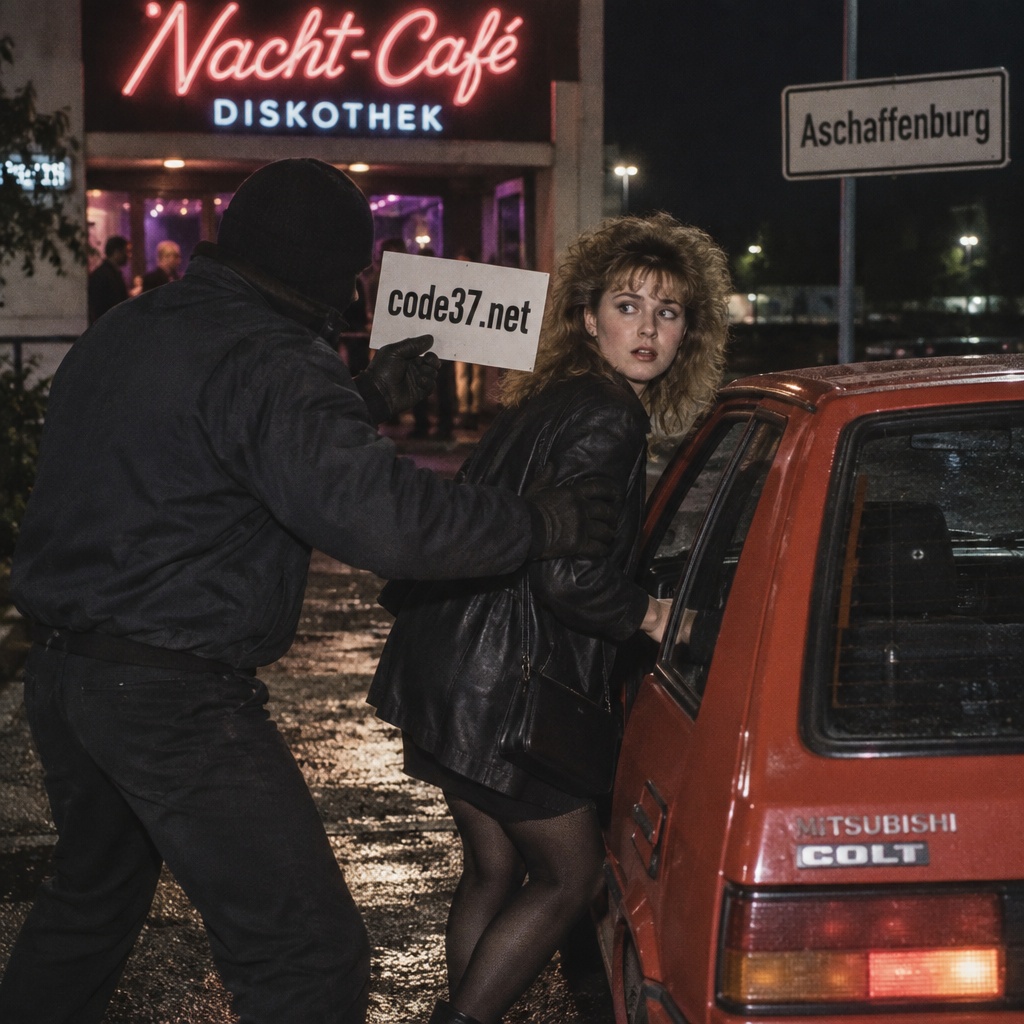
A heinous crime, which was only solved 30 years later, took place in 1988. It was 4 January when Ursula B., then aged 22, left the ‘Nacht-Café’ nightclub in Aschaffenburg at around 2 am. She got into her Mitsubishi Colt, where she was suddenly threatened by an unknown man who held a screwdriver to her throat. He forced the young hairdresser to drive to a remote wooded area not far from Haibach, where she was made to park the car in a secluded spot. He then blindfolded her with a scarf, tied her hands and raped the young woman for over three hours. During the rape, he stabbed her in the upper body countless times with the screwdriver. Ursula was forced to scream and say obscene things to him whilst the man, who reeked of alcohol, cigarettes and sweat, satisfied himself with her. At around 5 o’clock, the man let go of Ursula, whose body was covered in stab wounds and blood. He then laid the young woman on the cold forest floor, where he covered her battered, naked body with leaves. He then fled in Ursula’s car. Yet, miraculously, Ursula survived. Despite her life-threatening injuries and the winter cold, she managed to free herself and drag herself out of the woods, where a motorist discovered her and took her to hospital. Ursula underwent emergency surgery immediately; her upper body had 22 stab wounds. Fortunately, however, the attacker had not pierced her heart. The investigation was in full swing, but Ursula’s attacker could not be apprehended. After Ursula’s ordeal, the long struggle to return to normality began with the help of psychotherapy. Yet the agonising uncertainty remained until the Cold Case Unit of the Aschaffenburg Criminal Investigation Department took the case up again in 2015. They ran the DNA found at the time on the back seat of the car in which Ursula had been raped through the DNA database. Sure enough, a match was found with a man who had been convicted in 2004 of raping his wife. The man in question was the now 56-year-old, 1.70-metre-tall, unassuming Jürgen R., who had multiple previous convictions. He led an erratic life with frequent changes of job, his childhood having been shaped by his alcoholic father and stepfather. He had taken drugs in his youth. On 22 October 2017, Jürgen was arrested at his flat; during police questioning, he confessed to the rape – for which the statute of limitations had long since expired – but denied any intent to kill. At the subsequent trial, Jürgen claimed he could not remember anything due to a blackout caused by excessive alcohol consumption. Ursula doubted this and testified in court that, although he had smelled of alcohol, he was well aware of what he was doing. The Aschaffenburg Regional Court concurred, which is why they sentenced Jürgen B. to life imprisonment for attempted murder. Ursula followed the pronouncement of the verdict in the courtroom. After more than 30 years, justice had finally prevailed, albeit belatedly.